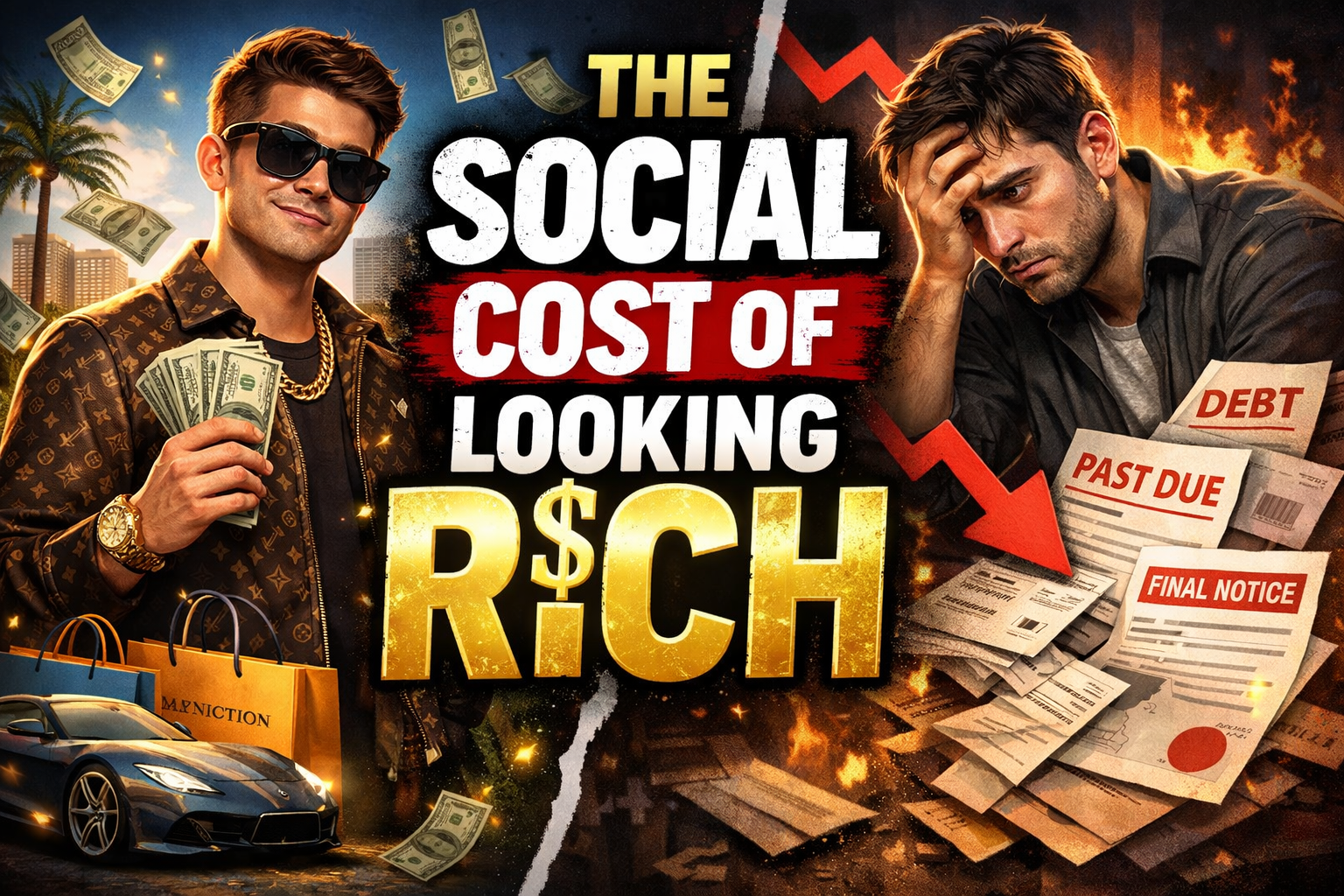
In an age dominated by curated Instagram feeds, luxury brand influencers, and the pervasive fantasy of aspirational living, the pressure to appear wealthy has never been more intense. The phenomenon, often termed “performative wealth” or “wealth signaling,” involves spending significant resources—often beyond one’s means—to project an image of affluence and success. While the immediate gratification of social admiration can be potent, the long-term social, psychological, and financial costs are profound and often devastating. This deep dive explores the multifaceted social cost of “looking rich,” moving beyond the balance sheet to examine the erosion of authenticity, relationships, and mental well-being.The Social Cost of Looking Rich
The Drivers: Why We Feel Compelled to Appear Wealthy
Understanding the cost first requires examining the engine behind the behavior. Several powerful, interconnected forces fuel the pursuit of appearing rich.
- Social Media & The Comparison Trap: Platforms like Instagram and TikTok are not merely social networks; they are highlight reels and marketplaces of envy. They create a distorted reality where luxury cars, designer handbags, and exotic vacations are normalized. The algorithm rewards opulence with visibility, creating a perceived link between displayed wealth and social worth. This constant exposure triggers a “reference anxiety,” where individuals measure their own success against these fabricated benchmarks, often feeling inadequate unless they can visually compete.
- Consumer Culture & Identity Economics: We live in an economy where identity is increasingly constructed through consumption. Brands are no longer just sellers of products; they are purveyors of lifestyles, values, and status. Owning a specific logo becomes a shorthand for belonging to a particular social tier—it’s a wearable badge of achievement. This turns consumption into a communicative act: “This bag says I am successful, tasteful, and ahead of you.”
- The Illusion of Access & The Hustle Culture Myth: The narrative of the “self-made” billionaire and the glamorization of hustle culture suggest that wealth is not only accessible but a direct reflection of merit and effort. Consequently, not displaying signs of wealth can be misconstrued as a lack of ambition or competence. In certain professional and social circles, appearing affluent is seen as a prerequisite for being taken seriously, attracting opportunities, or signaling one’s place in the hierarchy.
- Insecurity & Social Capital: At its core, performative wealth is often a response to deep-seated insecurity. It is an attempt to purchase social capital—respect, admiration, inclusion—that feels unattainable through other means. In a world perceived as increasingly competitive and judgmental, the visible trappings of success can act as armor against perceived social slights or exclusion.
The Multidimensional Cost: Paying the Price Beyond Money
The financial burden of sustaining a luxury facade—the debt, the depleted savings, the absence of investment—is the most direct cost. However, the social cost permeates much deeper, corroding the very foundations of a fulfilling life.
1. The Erosion of Authentic Relationships
Relationships built on a facade are inherently fragile. When the projection of wealth becomes central to one’s identity, it attracts people drawn to the symbol, not the substance. This leads to:
- Transactional Connections: Friendships and even romantic partnerships can become implicitly transactional, centered on maintaining a certain lifestyle or gaining access to a perceived social circle. The fear of being “found out” creates constant anxiety, preventing genuine vulnerability.
- Isolation Within the Facade: The individual may feel profoundly lonely, surrounded by people who admire their costume but do not know the person wearing it. This isolation is compounded by the avoidance of situations or people who might not fit the “luxury” narrative, narrowing one’s world.
- Resentment and Distrust: As the performance continues, the individual may grow resentful of the very friends they are trying to impress, sensing the connection is conditional. Similarly, they may project their own insecurities onto others, trusting no one’s motives.
2. Psychological Toll: Anxiety, Imposter Syndrome, and Identity Crisis
The mental health impact is severe and chronic.
- Chronic Financial Anxiety: The constant juggling act of debt payments, hiding true financial strain, and fearing a single unexpected expense can lead to sustained, high-level stress. This anxiety is not about building wealth but about preventing the collapse of an illusion.
- Intensified Imposter Syndrome: The individual knows the truth behind the curtain. Every compliment on their possessions can feel like a confirmation of their fraudulence, deepening feelings of being an imposter waiting for exposure. This syndrome is no longer confined to the workplace; it invades their entire social existence.
- The Identity Void: When “looking rich” consumes significant energy and resources, personal development in other areas—hobbies, skills, intellectual pursuits, character growth—stagnates. The persona overtakes the person. If the facade were to fall, the individual can be left with a terrifying question: Who am I without this performance?
3. The Opportunity Cost of Missed Living
Resources are finite. Money, time, and mental energy poured into maintaining an image are diverted from more meaningful, life-enriching endeavors.
- Financial Stagnation: Money spent on depreciating luxury goods is money not invested in education, a home, retirement accounts, travel with genuine cultural immersion, or starting a business. This trade-off can create a long-term wealth gap that becomes impossible to close.
- Experiential Poverty: In the pursuit of looking like they have a rich life, individuals often miss out on having a rich life. They might forgo a meaningful but modest vacation with loved ones because it wouldn’t generate “appropriate” social media content, or avoid casual, joyful gatherings that don’t align with their curated image.
- Stifled Personal Growth: The fear of failure—a necessary component of growth—is magnified when one is committed to a narrative of effortless success. This can paralyze individuals from taking worthwhile risks, pursuing a passion with an uncertain payoff, or admitting they need help or a change in direction.
4. Social Contribution and the Erosion of Empathy
On a broader societal level, the normalization of performative wealth has corrosive effects.
- Normalization of Financial Irresponsibility: When luxury debt is worn as a badge of honor, responsible financial behavior—saving, budgeting, living within one’s means—can be falsely framed as unambitious or lacking in sophistication.
- Widening the Empathy Gap: Immersion in a world of curated luxury can desensitize individuals to the economic realities of most people. It can foster a mindset where financial struggle is viewed as a personal failing rather than a complex interplay of systemic factors, eroding social solidarity and compassion.
- The Sustainability Paradox: The fast-fashion cycle of luxury trends and the constant consumption required to stay “relevant” stand in direct opposition to values of sustainability and mindful consumption, creating a moral dissonance for those who may care about these issues privately.
The Alternative: Cultivating Authentic Wealth
The antidote to the high social cost of looking rich is the intentional cultivation of authentic wealth—a state of abundance measured by metrics that cannot be purchased.
- Financial Authenticity: This means aligning spending with true personal values and long-term goals, not external validation. It involves embracing stealth wealth—where financial security and freedom are prized over display. The peace of mind from a robust savings account or a debt-free life offers a sense of security no handbag can match.
- Investment in Intangible Capital: Redirecting resources toward experiences (which become part of the self), education (which cannot be repossessed), health, and strong relationships builds a form of capital that is crisis-resistant and deeply fulfilling.
- Redefining Status Symbols: Shifting personal status symbols from “what I have” to “what I can do” or “what I know.” Status can be derived from unique skills, deep knowledge, creative output, or a reputation for integrity and generosity.
- Practicing Radical Visibility: This involves the courage to be seen in one’s authentic state—to share a modest but happy moment, to discuss financial prudence without shame, to value comfort over couture. This authenticity acts as a magnet for genuine connections and builds a community based on mutual respect, not mutual performance.
The Social Cost of Looking Rich: A Deeper Examination of Performative Affluence
The pursuit to appear wealthy is not a new phenomenon, but its scale, intensity, and mechanisms have been radically transformed in the digital age. This performative affluence—spending on visible status symbols to signal economic success—carries a profound and often overlooked social tax. While the immediate dopamine hit of social validation is real, the long-term costs erode financial stability, mental health, authentic community, and even societal trust. This essay delves beyond the surface of luxury logos to explore the intricate web of consequences paid by individuals and communities when “looking rich” is prioritized over being secure, content, or genuine.
Part 1: The Engine of Aspiration – Why the Facade is Built
Understanding the social cost requires examining the powerful cultural engines that make the facade seem not just desirable, but necessary.
1. The Platformed Economy of Envy: Social media has monetized aspiration. Platforms are designed to reward conspicuous consumption with likes, shares, and follower counts, creating a direct feedback loop between displayed wealth and perceived social value. This isn’t passive observation; it’s an active, algorithm-driven curriculum teaching users that visibility and worth are tied to luxury. The “haul” video, the “check my wrist” shot, and the geo-tagged luxury resort are not just posts; they are performative assets in a personal branding campaign where the self is commodified.
2. The Blurring of Wealth and Worth: In a culture deeply influenced by “hustle porn” and the myth of meritocracy, financial display is often mistakenly equated with moral virtue—hard work, intelligence, and discipline. Conversely, a lack of visible success can be unfairly interpreted as laziness or failure. This moral burden pushes individuals to curate evidence of their “winning,” turning personal finance into a public performance review. The pressure is particularly acute in professional niches like sales, tech, and creative industries, where perceived success is believed to attract real opportunity.
3. The Geography of Inequality: In cities with extreme wealth disparity, the visual landscape is a daily reminder of hierarchy. The constant exposure to luxury goods and lifestyles normalizes high-end consumption as a benchmark for a normal life. This “luxury creep” resets expectations, making a mid-tier product feel like a compromise and fostering a sense of deprivation even amid objective comfort. The desire to “look rich” becomes, in part, a desire to visually blend into the affluent strata of one’s environment, to not feel left behind in plain sight.
4. Insecurity and the Protective Costume: At its psychological core, performative wealth is often a defense mechanism. It is an attempt to pre-empt judgment, to command respect, and to mask vulnerabilities—be they related to one’s background, current financial instability, or social anxiety. The luxury item acts as armor, a non-verbal declaration that says, “I belong here. I am not to be overlooked.” This is especially potent for individuals from marginalized or working-class backgrounds who may feel added pressure to signal their hard-won place in middle or upper-class spaces.
Part 2: The Compound Interest of Social Cost – Where the Price is Paid
The invoice for this performance comes due in multiple, interconnected currencies.
1. The Relationship Tax: Transactional Bonds and Authentic Isolation
- Filtered Connections: A persona built on affluence acts as a social filter. It attracts those impressed by surfaces and repels those who might see through it or prioritize depth. The resulting social circle is often homogenous and conditional, based on the mutual maintenance of a certain image. These are fair-weather friendships, vulnerable to the first sign of financial trouble.
- The Impossibility of Vulnerability: True intimacy requires vulnerability—the ability to share fears, failures, and uncertainties. A life dedicated to projecting flawless success makes this impossible. You cannot confess your crushing credit card debt to someone you’ve been trying to convince of your boundless prosperity. This creates a profound, lonely dissonance: being admired yet unknown, surrounded yet isolated.
- Family Strain: The pressure to keep up appearances can create terrible rifts within families. It may involve hiding struggles from parents who sacrificed for you, or creating unsustainable expectations for siblings and partners. The “gift” of a luxury item to a family member can become a subtle, painful pressure point, reframing familial love through the lens of competitive gifting.
2. The Psychological Wound: Identity as a House of Cards
- Chronic Cognitive Dissonance: The individual lives with a constant, gnawing contradiction between their projected image and their financial reality. This dissonance is a well-documented source of chronic stress, leading to anxiety, insomnia, and a pervasive sense of unease. The mind is exhausted from maintaining the fiction.
- The Amplified Imposter: Imposter syndrome is no longer confined to the office. It becomes the soundtrack to one’s entire life. Every compliment on a designer item reinforces the fear of being “found out.” The individual may feel they are not just faking it at work, but faking their very place in their social world.
- The Erosion of Intrinsic Motivation: When actions are driven primarily by external validation—”Will this get likes? Will this impress?”—internal compasses falter. Hobbies are chosen for their photogenic quality, not joy. Careers are selected for their prestige, not purpose. Over time, this can lead to a deep sense of emptiness and a loss of authentic desire.
3. The Civic and Societal Drain: Broader Consequences
- The Normalization of Precarity: When flaunting debt-financed luxury is celebrated, prudent financial behavior—saving, investing, living below one’s means—is subtly framed as timid, unambitious, or uncool. This cultural shift normalizes financial fragility on a societal scale, discouraging the very habits that build long-term security and generational wealth.
- The Erosion of Empathy and Shared Reality: Immersion in a bubble of performative luxury can distort one’s perception of the average lived experience. It fosters a “just world” fallacy, where poverty is seen as a personal failure and one’s own displayed wealth is proof of superior merit. This erodes the social solidarity necessary for compassionate policy and mutual aid.
- Environmental Externalities: The cycle of fast-fashion luxury, constant trend turnover, and the demand for rare materials (e.g., in tech or jewelry) has a significant environmental cost. The pursuit of looking rich often conflicts with stated values of sustainability, creating ethical dissonance and contributing to waste and resource depletion.
Part 3: The Alternative Portfolio – Investing in Authentic Capital
The antidote is not asceticism, but a conscious reallocation of resources toward forms of capital that yield deeper, more sustainable returns.
1. Cultivating Financial Authenticity: This means moving from “How do I look?” to “How do I want to live?” It involves:
- Embracing “Stealth Wealth”: Finding power in financial privacy and security. The peace of mind from a paid-off car, a growing investment account, or an emergency fund provides a sense of control and freedom no status symbol can match.
- Budgeting for Values: Aligning spending with deeply held personal values, whether that’s education, travel for cultural immersion, supporting local businesses, or philanthropic giving. This creates integrity between action and belief.
2. Building Relational and Experiential Capital:
- Investing in Depth: Redirecting the money and, more importantly, the time and energy spent on curating an image into nurturing a few deep, trusting relationships where no facade is needed.
- Prioritizing Experiences Over Artifacts: Studies consistently show experiences provide longer-lasting happiness than material goods. A challenging hiking trip, a pottery class, or a meaningful concert with friends contributes to a richer sense of self and creates memories that become part of one’s identity, unlike a depreciating accessory.
3. Redefining Personal Metrics of Success:
- Skill as Status: Deriving status from demonstrable competence—mastering a language, becoming an excellent cook, building a website, playing an instrument, fixing things. This type of status is earned, not bought, and is inherently fraud-proof.
- Character as Currency: Building a reputation for integrity, generosity, dependability, and kindness. In the long run, this social currency is far more valuable and attractive than any financial display, fostering trust and opportunity based on who you are, not what you own.
Conclusion: The Liberating Power of Enough
The ultimate social cost of “looking rich” is the surrender of autonomy. It cedes the definition of one’s worth to the fluctuating algorithms of trend and public opinion. It trades the freedom to be imperfect, to grow, to struggle, and to connect genuinely for the gilded cage of constant performance.
Breaking free from this cycle is a radical act of self-definition. It is the realization that “enough” is not a financial threshold to be displayed, but a psychological state to be cultivated. It is the understanding that the most profound forms of wealth—security, peace of mind, authentic love, and the freedom to live in accordance with one’s values—are inherently invisible. They cannot be captured in a Instagram story, but they form the unshakable foundation of a life not just looked at, but truly lived. In the economy of a meaningful existence, the return on authenticity is, and always has been, infinitely greater than the hollow dividends of performative wealth.
The social cost of looking rich is ultimately a cost paid in freedom. It is the freedom to be oneself, to use resources for genuine betterment, to form relationships without pretense, and to define success on one’s own terms. The relentless pursuit of appearing affluent trades long-term substance for short-term spectacle, inner peace for external approval, and authentic connection for curated admiration.
In a society saturated with signals, the most powerful and rebellious act may be to opt out of the performance. To find wealth in financial prudence, richness in authentic experience, and status in a well-lived, integrated life. The price of the facade is too high; the return on authenticity, however, is a genuine and unshakeable prosperity.