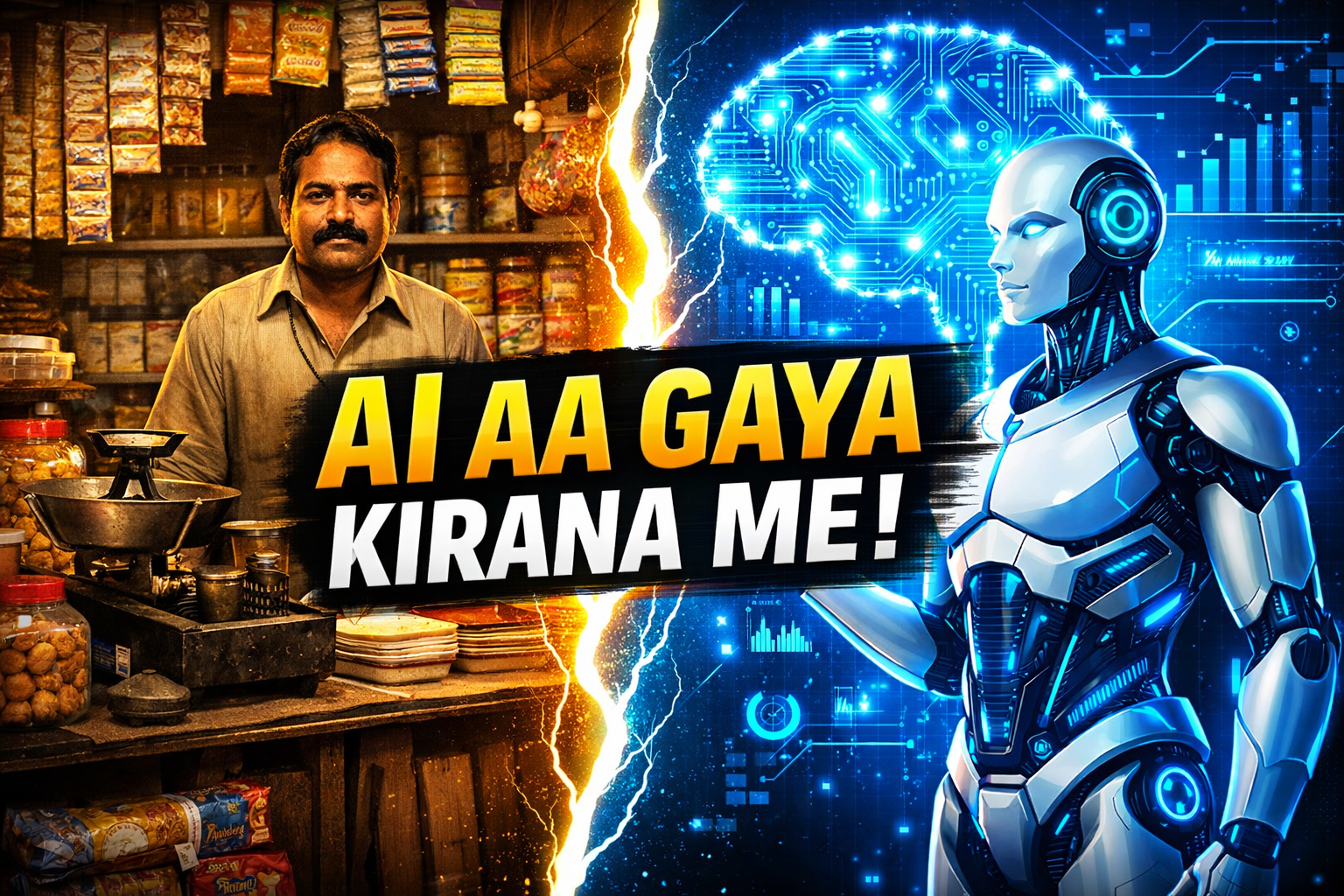
For generations, the neighborhood kirana store has been the pulsating heart of Indian commerce. More than just a point of sale, it is a community hub, a trusted advisor, and a symbol of resilience. From the fragrant sacks of spices and rows of gleaming utensils to the last-minute packet of milk or biscuits delivered with a smile, these stores are woven into the nation’s social fabric. However, in an era dominated by e-commerce giants, deep-pocketed retail chains, and rapidly shifting consumer expectations, the traditional kirana store faces an existential challenge. Enter Kirana AI—not merely a tool, but a comprehensive digital revolution designed to empower the estimated 12 million-plus kirana stores across India. This 3000-word exploration delves into how artificial intelligence is transforming these mom-and-pop shops, ensuring they don’t just survive but thrive in the 21st century.Kirana AI
Understanding the Kirana Store: Strengths and Pain Points
To appreciate the impact of Kirana AI, one must first understand the landscape. The strengths of a typical kirana store are deeply human: unparalleled personal relationships, hyper-local understanding, immense flexibility (including credit), and instant convenience. The shopkeeper often knows customers by name, their preferences, and their family cycles.
Yet, significant pain points plague this model:
- Inventory Management Chaos: Reliance on memory, manual registers, or outdated excel sheets leads to frequent stock-outs of fast-moving items and overstocking of slow-movers, tying up crucial capital.
- Financial Opacity: The blurring lines between personal and business finances, coupled with a lack of clear profit-and-loss statements, makes it impossible to understand true profitability.
- Limited Customer Insights: While the shopkeeper knows Mrs. Sharma buys Basmati rice, they have no data-driven insight into her overall basket size, buying frequency, or potential for cross-selling.
- Inefficient Ordering: The process of calling multiple distributors, negotiating prices, and manually placing orders is time-consuming and prone to error.
- Competition from Modern Trade & E-commerce: Organized retail offers variety, discounts, and loyalty programs. Quick-commerce promises 10-minute deliveries. The kirana’s convenience advantage is under direct threat.
- Digital Divide: Many shopkeepers, especially in smaller towns, lack the skills or confidence to adopt complex digital point-of-sale (POS) systems.
Kirana AI emerges as the solution to these very challenges, not by replacing the human touch, but by augmenting it with intelligent, data-driven capabilities.
What Exactly is Kirana AI?
Kirana AI is not a single product but an ecosystem of intelligent software solutions built specifically for small, independent retailers. It typically integrates several core technologies:
- Machine Learning (ML) & Predictive Analytics: The brain of the system. It analyzes historical sales data to forecast future demand for thousands of SKUs (Stock Keeping Units) with startling accuracy, adjusting for factors like seasonality, festivals, and local events.
- Natural Language Processing (NLP): Allows shopkeepers to interact with the system using voice commands in local languages (“Kitna maal bacha hai Tata Salt ka?” or “Kal ka top-selling product dikhao”). This is a game-changer for usability.
- Computer Vision: Enables features like smart checkout using barcode/QR scanning, and even futuristic applications where a camera identifies products placed in front of it for instant billing.
- Cloud Computing: Ensures data is securely stored, accessible from any device, and seamlessly updated. This makes the system affordable (often a subscription model) and eliminates the need for expensive on-premise servers.
These technologies are packaged into user-friendly mobile and desktop applications that integrate Billing & POS, Inventory Management, Accounting, Customer Relationship Management (CRM), and Supplier Connectivity into a single, cohesive platform.
Core Features and Functionalities: A Deep Dive
Let’s break down the specific features that constitute a robust Kirana AI platform:
1. Intelligent Inventory Management:
This is the flagship feature. The AI doesn’t just track stock levels; it predicts them.
- Automated Stock Alerts: The system sends proactive alerts when stocks of a particular item fall below a pre-defined threshold.
- Demand Forecasting: Using ML models, it predicts which items will be in high demand in the coming days or weeks, preventing stock-outs during critical periods.
- Dead Stock Identification: It flags items that haven’t sold in a long time, suggesting discounts or bundles to free up shelf space and capital.
- Optimal Ordering: The AI can even suggest the optimal quantity to order from distributors to minimize costs and maximize freshness.
2. Smart Billing and Checkout:
A fast, error-free billing experience enhances customer satisfaction.
- Quick Product Search: Search by name, category, or even scan barcodes.
- Digital Invoicing: Generates clean, professional bills, accepting UPI, cards, and cash.
- Bulk Sale Management: Easily handle bulk purchases for local events, temples, or restaurants.
3. Integrated Accounting and Business Insights:
This brings transparency to the business’s financial health.
- Auto-generated Reports: Daily sales reports, profit & loss statements, tax summaries (GST), and expense trackers are created automatically.
- Customer-wise & Product-wise Analytics: Understand which customers are most valuable and which products deliver the highest margins.
- Cash Flow Management: Get a clear view of money coming in and going out, including credit given to customers and owed to distributors.
4. Customer Engagement and CRM:
Kirana AI helps digitize the legendary shopkeeper-customer relationship.
- Digital Ledgers: Replace the physical khata with a secure digital ledger where customer credits are tracked and reminders can be sent politely via WhatsApp.
- Loyalty Programs: Create simple digital loyalty schemes (e.g., buy 9, get the 10th free) without the need for physical stamps or cards.
- Personalized Engagement: Using purchase history, the shopkeeper can send personalized offers (“Sir, your favorite coffee brand is on offer this week”) directly via WhatsApp, blending data with personal touch.
5. Supply Chain and Distributor Integration:
Some advanced Kirana AI platforms connect directly to distributor networks.
- Digital Catalogues: Browse products and prices from multiple distributors within the app.
- One-Click Ordering: Place orders electronically, eliminating phone calls and errors.
- Price Comparison: See which distributor offers the best price for a particular brand.
6. Multi-Store and Warehouse Management (For larger kiranas):
For shop owners running multiple outlets or having a separate storage godown, the AI can synchronize inventory across all locations in real-time.
The Tangible Benefits: Why Every Kirana Store Should Adopt AI
The integration of Kirana AI translates into direct, measurable benefits:
- Increased Revenue (10-25%): By preventing stock-outs of popular items, enabling smart upselling, and running targeted promotions.
- Reduced Costs (15-30%): By minimizing dead stock, optimizing inventory holding costs, and reducing pilferage through better tracking.
- Improved Profit Margins: By identifying high-margin products and providing data to negotiate better prices with distributors.
- Massive Time Savings: Automating billing, accounting, and ordering saves 2-4 hours per day, allowing the shopkeeper to focus on customer service or business expansion.
- Enhanced Customer Loyalty: Faster service, personalized offers, and continued credit facilities strengthen the customer bond.
- Access to Credit: Digital financial records serve as credible proof of business health, making it easier to secure loans from formal financial institutions.
- Future-Proofing the Business: Equips the store to compete effectively in a digital economy and even partner with quick-commerce or B2B platforms on their own terms.
The Human Element: Usability and Adoption
The most sophisticated AI is useless if the end-user cannot operate it. Successful Kirana AI platforms prioritize:
- Vernacular Interface: Full operation in Hindi, Tamil, Telugu, Marathi, etc.
- Voice-First Design: For shopkeepers who are not comfortable typing.
- Minimalist Design: Simple, icon-based navigation that is intuitive.
- Offline Functionality: Critical for areas with patchy internet; data syncs when connectivity is restored.
- Dedicated Support: On-ground or phone-based support teams to handhold during onboarding and troubleshooting.
Case Study: Transforming “Sharma General Store”
Consider the hypothetical case of Sharma General Store, a 30-year-old kirana in a Jaipur suburb. Before AI:
- Mr. Sharma spent evenings manually checking stocks.
- He frequently ran out of cola during summer and diyas before Diwali.
- Accounting was a monthly headache.
- Younger customers started ordering staples from e-commerce apps.
After adopting a Kirana AI platform:
- Week 1: Digital catalog and billing are set up. Customer phone numbers are captured at checkout.
- Month 1: The AI identifies that premium biscuits and organic pulses have high margins but low visibility. Mr. Sharma creates a display.
- Month 3: Before the summer, the system alerts him to increase stock of cooling beverages and sunscreen. He avoids a stock-out.
- Month 6: Using the customer data, he runs a “Monsoon Tea & Snacks” WhatsApp offer to his top 100 customers, seeing a 20% redemption rate. His digital ledger reduces outstanding credit by 40%.
- Year 1: With clear financial reports, he secures a small loan to renovate his storefront. His profits are up by 18%, and he has regained his younger customers by offering a seamless, tech-enabled experience.
The Broader Ecosystem and Key Players
The Kirana AI space is vibrant and competitive, featuring:
- Pure-play SaaS Providers: Companies like Bijak, Khatabook, and OkCredit started with digital ledgers and accounting and are expanding into full-stack solutions.
- B2B Marketplaces: Players like Udaan, Jumbotail, and ElasticRun provide an integrated model where AI-powered inventory management is directly linked to their sourcing and delivery platform.
- Large Tech Integrators: PhonePe (with its SmartSpeaker), Paytm, and Google Pay are embedding kirana management tools within their payment ecosystems.
- ERP & POS Specialists: Established players like Gofrugal and Marg ERP have evolved their desktop solutions into cloud-based, AI-enhanced platforms.
Challenges and the Road Ahead
The journey is not without hurdles:
- Trust & Data Privacy: Shopkeepers must trust the platform with their most sensitive data—sales and customer information.
- Cost Sensitivity: Even small subscription fees can be a barrier. Freemium models with paid advanced features are common.
- Digital Literacy: Bridging this gap remains the single biggest challenge, requiring relentless focus on simplicity and support.
- Interoperability: A seamless flow of data between the kirana’s AI platform, distributor systems, and bank networks is still a work in progress.
The future of Kirana AI is incredibly promising. We can anticipate:
- Hyper-personalized Promotions: AI generating micro-offers for individual customers in real-time.
- Integration with Quick-Commerce: Kiranas becoming micro-fulfillment centers for 10-minute delivery players, managed entirely by AI for order routing and inventory reservation.
- Predictive Credit Scoring: AI assessing the creditworthiness of customers based on purchase history for automated, risk-managed credit lines.
- IoT Integration: Smart shelves with weight sensors that automatically update inventory levels.
Conclusion: More Than Technology, A Lifeline
Kirana AI represents a profound shift. It is not about imposing a cold, robotic efficiency on a warm, human-centric business. Instead, it is about preserving the soul of the kirana store while empowering it with the tools of the modern age. It automates the tedious, illuminates the obscure, and amplifies the intuitive.
By embracing AI, the neighborhood shopkeeper is no longer just fighting for survival against corporate goliaths. They are leveraging a force multiplier that allows them to play to their innate strengths—local knowledge, personal relationships, and adaptability—while operating with the precision and insight of a large corporation. Kirana AI is, therefore, more than a software category; it is a vital lifeline, ensuring that the heart of India’s retail continues to beat strongly, powering local economies and serving communities for generations to come. The digital kirana is here, and it is intelligent, resilient, and here to stay.
A really good blog and me back again.