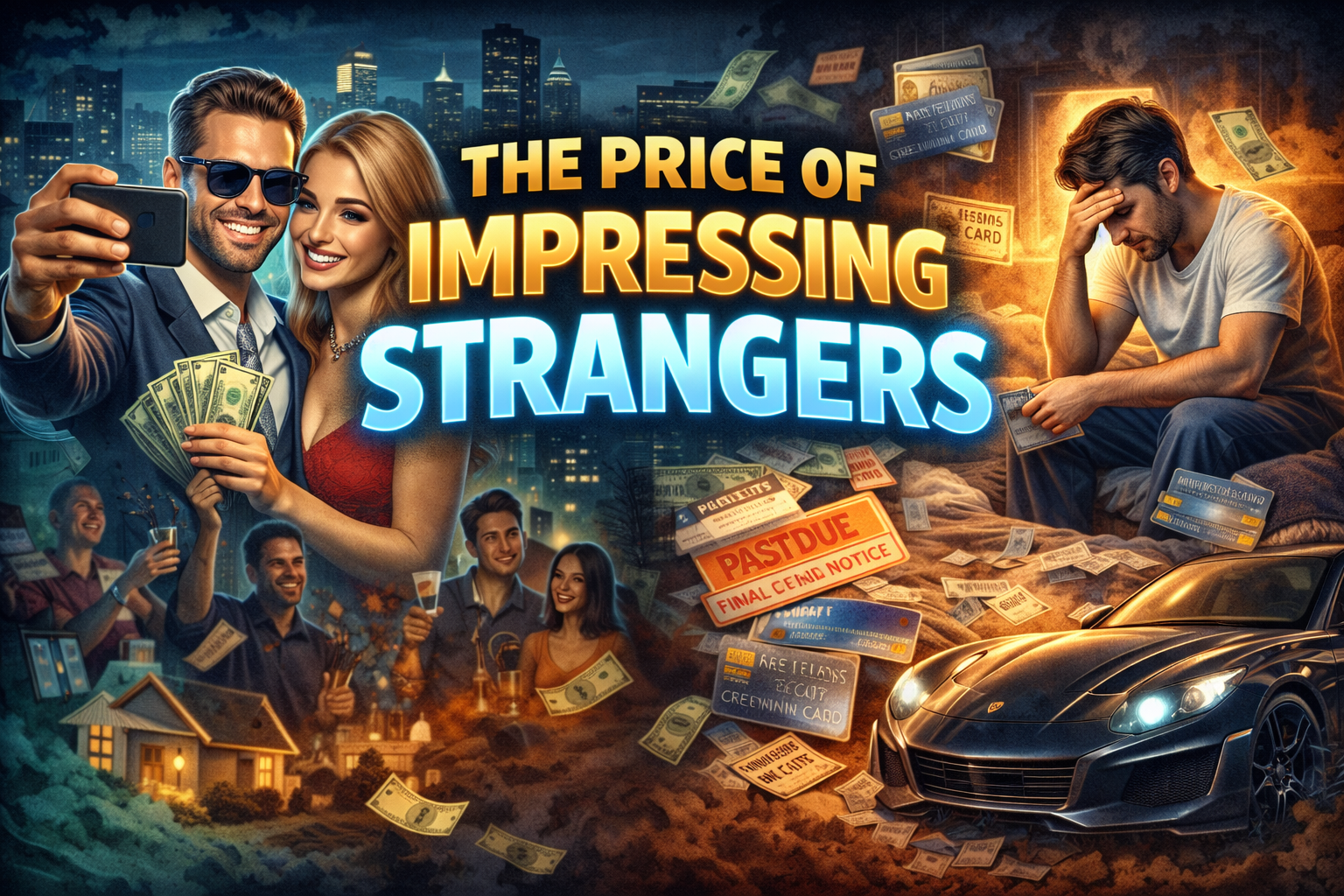
We live in an age of unprecedented visibility. Every coffee, commute, vacation, and meal can be a potential broadcast to an audience of hundreds, if not thousands. This hyper-connectivity has birthed a silent, pervasive financial epidemic: the crushing cost of impressing people we don’t know, and often don’t even like. It’s not about keeping up with the Joneses anymore; it’s about performing for the digital gallery, a faceless jury whose approval we subtly, and expensively, seek. This is the modern financial burden of “Social Spending”—and it’s draining our wallets, our well-being, and our authenticity.The Price of Impressing Strangers
While traditional financial advice warns against lavish cars and McMansions, it often misses the micro-transactions of image curation: the $8 artisanal toast you bought for the grid, not your hunger; the uncomfortable but “Instagrammable” outfit; the vacation planned around photo-ops, not relaxation. This isn’t mere vanity. It’s a complex, economically significant behavior driven by deep psychological needs, algorithmic pressures, and a distorted social contract. Let’s pull back the curtain on this quiet budget killer.
What Exactly Are We Paying For? Defining “Social Spending”
Social Spending is the discretionary allocation of funds primarily motivated by the desire to manage perceptions, cultivate a specific personal brand, or gain social capital among broad, often anonymous networks. It goes beyond functional purchase (I need a coat) or even aspirational purchase (I want a nice coat). It’s a performative purchase (This coat will make me look a certain way in contexts where I am being observed).
The key differentiator from old-school consumption is the audience scale and anonymity. Previously, you might buy a nice watch to impress clients or a new dress for a reunion—a targeted audience. Today, the audience is potentially limitless and unseen. We perform for the algorithm, which rewards certain aesthetics, and for the amorphous “public,” a blend of acquaintances, strangers, and curated influencers who set the unwritten standards.

The Many Faces of the Performance Tax: Where Your Money Quietly Disappears
This burden manifests across every facet of modern life, often disguised as personal choice.
1. The Culinary Theater: Dining as Content Creation
Gone are the days of eating a meal simply to enjoy it. Now, the experience is often subservient to its documentation.
- The “Instagrammable” Restaurant Premium: Choosing a restaurant based on interior design and “plate aesthetics” over food quality or value. You’re paying a 20-30% markup for neon signs, flower walls, and elaborate plating that photographs well.
- The Performance of Abundance: Ordering extra dishes, cocktails, or desserts specifically to create a tableau of lavishness for a photo, often wasting food and money.
- The Location Tag as Status Symbol: Seeking out the newest, most-hyped, or most exclusive spot, not for the cuisine, but for the geo-tag social proof.
2. Wardrobe as Costume: Dressing for the Digital Gaze
Fashion has always signaled status, but the speed and context have changed dramatically.
- The “Wear-Once” Economy: Purchasing fast-fashion items for a single event or photo shoot, driven by the fear of being seen in the same outfit online twice. This is environmentally catastrophic and financially draining.
- Micro-Trend Indenturement: The relentless churn of TikTok-driven micro-trends (cottagecore, balletcore, quiet luxury) pressures constant wardrobe refreshes to signal being “current.” The cost isn’t one expensive item, but hundreds of dollars in transient pieces.
- Logomania & Quiet Luxury: Two sides of the same coin. Whether it’s blatant branding or the subtle, expensive signifiers of “old money” aesthetic (The Row, Loro Piana), you’re paying an exorbitant premium for the symbolic message, not the material quality.
3. Travel & Leisure: The Burden of the “Perfect” Trip
Travel has transformed from an escape to a curated production.
- Destination Checklistism: Visiting places because they are trending on social media, not from genuine interest. The trip becomes about capturing the iconic shot (Santorini sunset, Bali swing) rather than personal exploration.
- Accommodation Overfunction: Booking boutique hotels or Airbnbs purely for their photogenic qualities—rooftop pools, scenic bathtubs, picturesque courtyards—while sacrificing location, comfort, or value.
- The Performance of Spontaneity: The “surprise trip” or “luxury experience” gifted for content, often financed on credit, creating pressure to display a perfect, grateful relationship.
4. The Digital Stage Props: Technology & Gadgets
- The Camera-First Phone Upgrade: Justifying the latest $1,200 smartphone not for its utility, but for its superior camera system, essential for producing high-quality content. The upgrade cycle accelerates, fueled by content quality anxiety.
- Aesthetic Tech: Expensive headphones, keyboards, or monitors that complete a “desk setup” aesthetic for Zoom backgrounds or setup tours, far exceeding functional needs.
5. The Wellness & Lifestyle Facade
- The Expensive Workout Class Membership: Less about fitness, more about being part of a trendy community (hot yoga, boutique cycling) and displaying the associated branded gear.
- “Shelfies” and Intellectual Posturing: Buying beautiful, unread hardcover books on philosophy or poetry to style a bookshelf background. Purchasing specific journals, pens, or “deep work” tools to perform productivity.
The Psychological Engine: Why We Keep Paying the Price
This isn’t irrational behavior. It’s a rational, if costly, response to powerful psychological and technological forces.
- Dopamine & Variable Rewards: Likes, comments, and shares act as digital dopamine hits. We invest money to produce content that might trigger this reward, operating on a casino-like variable reinforcement schedule.
- The Fear of Social & Algorithmic Obscurity: In an attention economy, invisibility feels like failure. Spending to create standout content is a hedge against being forgotten by your network and the algorithm.
- Identity Capital in a Gig Economy: For many, personal brand is professional currency. The line between personal and professional blurs; investing in a luxurious-looking life can be misconstrued as investing in business prospects, networking, and credibility.
- The Comparison Trap on Steroids: We’re no longer comparing ourselves to neighbors or colleagues, but to the globally curated highlights of millions. This “reference anxiety” resets our “normal” to an unattainable, expensive fantasy.
- Parasocial Pressure: We feel subconsciously accountable to our followers, as if we owe them a continuation of a certain narrative—success, adventure, beauty. Funding that narrative becomes a perceived obligation.

The Hidden Costs Beyond the Bank Account
The financial leakage is just the start. The true price is paid in less tangible, but more valuable, currencies.
- Eroded Authenticity: When experiences are framed through the lens of “how will this look?”, we disconnect from our genuine feelings and preferences. We lose the ability to know what we truly enjoy.
- Debt & Financial Anxiety: This spending is often financed by credit cards, Afterpay, or Klarna, divorcing the pleasure of performance from the pain of payment, leading to stealthy debt accumulation.
- Time & Mental Energy: The labor of curating—staging photos, editing, crafting captions, monitoring engagement—is immense unpaid work that drains focus and mental peace.
- Diminished Joy & The “Experience Paradox”: Studies suggest that photographing an experience for sharing can actually impair memory and enjoyment. You become a director of your life, not a participant.
- Relationship Strain: Partnerships and friendships can become transactional content opportunities. Authentic moments are interrupted for staging, creating tension and resentment.
Reclaiming Your Wallet and Your Self: A Practical Guide
Breaking free from Social Spending requires conscious rewiring. It’s not about austerity, but about alignment.
1. Conduct a “Social Spending” Audit.
For one month, track every non-essential purchase. For each, ask: “Would I still buy this if I could not tell anyone about it, ever?” Be brutally honest. The patterns will be revealing.
2. Implement a 48-Hour Rule.
For any non-essential purchase over a set amount ($50, $100), impose a 48-hour waiting period. After two days, ask: “Is this for me, or for the performance?” This disrupts the impulse driven by fleeting social pressure.
3. Curate Your Inputs to Curate Your Outputs.
Mute, unfollow, and curate aggressively. If an account (even a friend’s) consistently makes you feel inadequate or triggers the “want” reflex, mute it. Your feed is your environment. Choose one that inspires your real life, not one that makes you want to finance a facade.
4. Practice Stealth Mode.
Deliberately have experiences, buy items, or visit places and do not post about them. Savor the secret. Relearn the intrinsic joy of an experience, its value to you alone. This is a muscle that needs retraining.
5. Redefine “Value.”
Shift your value assessment from external perception to internal metrics: Joy-per-dollar, comfort-per-dollar, time-saved-per-dollar, or learning-per-dollar. Does this purchase bring genuine comfort, save me meaningful time, or contribute to a real skill?
6. Budget for Authentic Aspiration.
It’s okay to want nice things! The key is intentionality. Create a budget line for “Things I Truly Love.” Maybe it’s exquisite coffee, quality linen, or concert tickets. Enjoy them fully, for you. The difference is in the motivation, not the price tag.
7. Embrace the Power of “Enough.”
Challenge the narrative of endless upgrade. Your current phone, car, wardrobe, and home might be perfectly sufficient for a happy, functional life. Sufficiency is a radical, wealthy state of mind.
Conclusion: The Wealth of Invisibility
The most profound freedom in our modern world may be the freedom from the gaze—the liberty to be uncurated, unoptimized, and unimpressive. It is in those unobserved moments that we reconnect with our authentic tastes, our financial goals, and our unmediated joy.
The price of impressing strangers is not just a line item on a bank statement. It’s a tax on your attention, your autonomy, and your life. By recognizing Social Spending for what it is—a performative financial burden—we can begin to redirect those resources. We can invest in the quiet, un-shareable things that build genuine wealth: security, peace of mind, deep relationships, and a self that doesn’t require an audience to feel valid.
The ultimate status symbol in 2024 isn’t a luxury label or a exotic location tag. It’s a funded retirement account, a calm nervous system, the ability to be genuinely bored, and the quiet confidence of a life lived for its own sake. That is a performance worth financing.