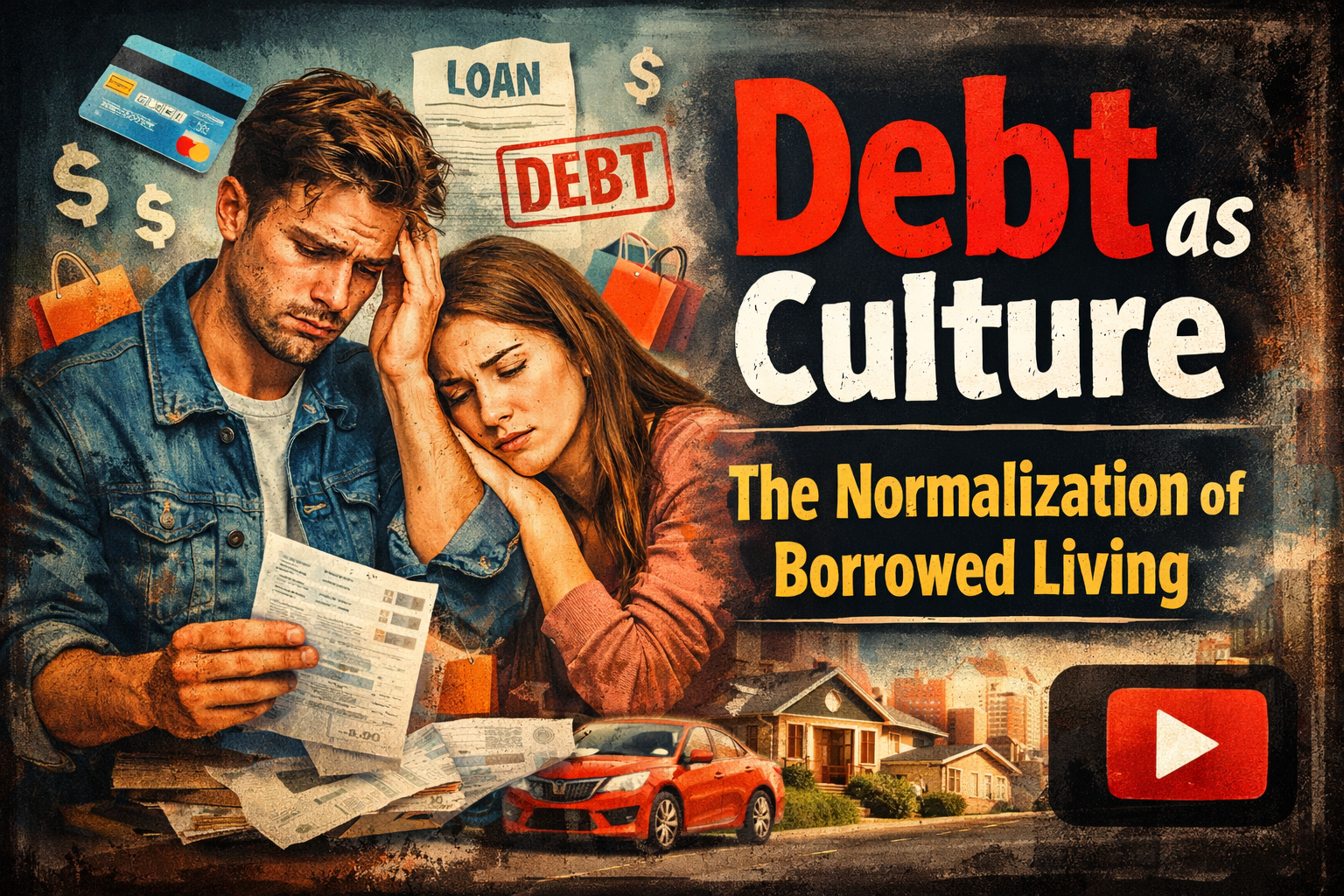
For much of human history, debt carried a profound social stigma. In agrarian societies, indebtedness often meant vulnerability, dependence, and moral failing. Victorian values championed thrift, savings, and living within one’s means. The phrase “neither a borrower nor a lender be” from Shakespeare’s Hamlet echoed through generations as conventional wisdom. Yet, within just a few decades, this centuries-old mindset has undergone a radical reversal. Today, debt is not merely a financial tool but a cultural fixture—woven into the fabric of daily life, identity formation, and social participation. How did borrowed living transition from shameful secret to normalized reality? This shift represents one of the most profound cultural transformations of the modern era, reshaping how we approach education, housing, consumption, and even our sense of self.Debt as Culture: The Normalization of Borrowed Living
The Historical Pivot: Post-War Prosperity and the Birth of Consumer Credit
The normalization of debt began in earnest in the mid-20th century, particularly in postwar America, but has since become a global phenomenon. Following World War II, economies geared toward mass production needed corresponding mass consumption. The solution: making credit accessible to the average household. The introduction of charge cards, followed by revolving credit cards like BankAmericard (later Visa) in 1958, created a revolutionary disconnect between purchase and payment. For the first time, one could acquire goods without immediate financial means, paying later—with interest.
This financial innovation coincided with powerful ideological messaging. Advertising in the 1950s and 60s began equating consumption with happiness, success, and full participation in society. The “American Dream” increasingly included not just home ownership but a car, appliances, and leisure goods—often financed. Economists and policymakers promoted consumer credit as an engine of growth and a pathway to middle-class comfort. Debt shed its moral taint and became reframed as a tool for achieving the good life. This post-war period established the foundational belief that has since intensified: that prosperity can be accessed ahead of schedule, and that waiting is not just inconvenient, but a form of deprivation.
The Mechanisms of Normalization: How Debt Became Invisible
Several interconnected systems have worked to embed debt into culture, making it appear not just acceptable, but natural and unavoidable.
1. Financialization of Daily Life: Over the last forty years, the global economy has become increasingly financialized—focused on financial channels, markets, and actors. This shift means that aspects of life once considered outside the realm of finance are now monetized and leveraged. Education, once largely a public good, is now a personal investment financed by loans. Healthcare costs in countries like the U.S. are a leading cause of personal debt. Even daily transactions are mediated by credit systems. The result is that engaging with debt is no longer a choice but a prerequisite for participation in key life stages.
2. The Marketing of Aspiration: Advertising and media constantly project images of a life that is aesthetically curated, experience-rich, and gadget-filled. Social media amplifies this, creating a 24/7 showcase of lifestyles that often outstrip the visible means of those portraying them. The message is implicit: you deserve this life now. Fintech companies and credit providers explicitly tie borrowing to identity, selling not just money but access to a better version of oneself. “Buy Now, Pay Later” (BNPL) services like Afterpay and Klarna frame debt as smart shopping—a seamless, almost invisible part of the checkout process, stripped of the gravity of a “loan.”
3. The Erosion of Alternatives: As wages have stagnated relative to the cost of living—especially for housing, education, and healthcare—debt has filled the gap. Saving for a house down payment on a median income in many cities is mathematically improbable without family wealth. Avoiding student debt often means forgoing higher education, with severe long-term earnings consequences. In this context, debt is not a foolish choice but a rational, even forced, adaptation to economic reality. When the structures of society make borrowed living the only viable path to stability, it ceases to be a cultural preference and becomes a systemic imperative.
4. The Language of Empowerment: The financial industry has masterfully rebranded debt. Words like “leverage,” “financing,” and “credit” sound strategic and professional, replacing the negative connotations of “debt” and “borrowing.” Student loans are an “investment in your future.” A mortgage is “building equity.” Credit card rewards programs frame borrowing as gaining benefits. This linguistic shift reframes the debtor from someone in a precarious position to someone making savvy, forward-thinking decisions.
Generational Dimensions: Debt as Rite of Passage
The cultural experience of debt varies significantly by generation, normalizing it through different life pathways.
Millennials and Gen Z have come of age in an economy where debt is the entry ticket to adulthood. For them, student loan debt is a collective experience—a shared burden that bonds their cohort. They often assume that starting life with a negative net worth is standard. This generation also faces the “experience economy” pressure, where travel, dining, and curated lifestyles are valorized on social platforms. Services like BNPL and travel-focused credit cards make funding these experiences immediately accessible, further cementing debt as part of youth culture.
Generation X witnessed the transition, often carrying significant credit card and mortgage debt, having bought into the homeownership dream right before major housing crises. They navigated the shift from debt as occasional tool to permanent lifestyle.
Baby Boomers, while perhaps more likely to view debt cautiously, also benefited from periods of high inflation that eroded fixed-rate mortgage debt and participated in the credit card explosion. Their experience often normalized mortgage debt as “good debt.”
Each generation passes its normalized debt practices to the next, but with increasing intensity. Parents who took student loans may see their children take larger ones; those who used credit cards for emergencies see their children use them for daily subscriptions. The baseline of what is considered normal debt continually shifts upward.
Psychological and Social Consequences: The Weight of the Invisible Burden
The cultural normalization of debt has profound psychological and social impacts that often remain undiscussed precisely because the phenomenon is so commonplace.
1. The Normalization of Anxiety: While society has normalized taking on debt, it has not normalized the chronic stress that accompanies it. The constant background anxiety of repayment, the compounding fear of emergency expenses, and the pressure to maintain income create a pervasive state of psychological precarity. Yet, because “everyone is in debt,” this anxiety is often privatized, seen as a personal failing rather than a structural condition.
2. The Deferral of Life Milestones: Culturally, we still measure adulthood by traditional milestones: independent living, marriage, homeownership, children. Debt delays these markers, creating a prolonged “adolescence” or “emerging adulthood.” This delay causes social friction, as older generations may perceive younger ones as irresponsible, misunderstanding that the economic landscape has fundamentally changed. The individual internalizes this as personal failure.
3. The Illusion of Participation: Debt provides the material signifiers of social belonging—the right clothes, the smartphone, the ability to join friends at restaurants, the car that doesn’t embarrass. It funds the appearance of stability and success. In the short term, this creates social inclusion. In the long term, it can create a hollowing out, where the performance of a lifestyle replaces its substance, and the fear of losing the ability to borrow (i.e., to participate) becomes a powerful motivator to take on more debt.
4. The Erosion of Future Possibility: When a significant portion of future income is already committed to debt repayment, the ability to take risks diminishes. Entrepreneurship, career changes, creative pursuits, or even having children become calculated against existing obligations. Debt, therefore, doesn’t just finance the present; it mortgages future freedom and flexibility. A culture of debt is, inherently, a culture that discounts the future in favor of the present.
The Resistance and Alternatives: Is a Counter-Culture Emerging?
Despite the powerful forces normalizing debt, counter-currents exist. The Financial Independence, Retire Early (FIRE) movement advocates extreme saving and debt aversion. Minimalism as a lifestyle trend rejects consumerism and its accompanying debt. Online communities share strategies for debt repayment and frugal living. Critics of student loan systems advocate for free public college and debt cancellation.
These movements, however, often remain subcultures rather than the mainstream. They frequently require a degree of privilege—higher incomes that allow for aggressive saving, or family support that prevents initial debt accumulation. For many, the mathematical reality of low wages and high costs makes debt avoidance impossible, rendering these alternatives as cultural niches rather than viable mass pathways.
Furthermore, the financial system itself often penalizes the debt-free. Without a credit history (built through borrowing and repayment), one cannot get a mortgage, sometimes even an apartment rental. Aversion to student debt can limit earning potential. The system is designed to make participation without debt increasingly difficult, closing off escape routes from borrowed living.
Conclusion: Toward a Conscious Culture of Finance
Debt has undeniably become cultural—a normalized, ingrained, and often invisible element of modern life. This normalization is not accidental but the result of decades of deliberate policy, financial innovation, marketing, and shifting social values working in concert with stagnant wages and rising costs. The consequence is a society where borrowed living is less a choice than a condition, shaping our life trajectories, psychological states, and social relations.
Recognizing debt as a cultural phenomenon, rather than purely a personal financial issue, is the first step toward meaningful change. It moves the conversation from individual shaming (“why did you take out so many loans?”) to systemic questioning (“why does society require this debt to access basic pillars of stability?”).
A healthy culture would make debt a true tool—available, but not obligatory; useful, but not identity-forming; a bridge to opportunity, not a lifelong burden. Achieving this requires not just personal financial literacy (though that helps), but structural shifts: affordable education and housing, wages that keep pace with costs, and a financial system that doesn’t profit from perpetual indebtedness.
Until then, we live in a borrowed culture, building our present on a mortgaged future. The challenge ahead is whether we can transform our relationship with debt from a normalized dependency to a conscious choice, reclaiming both our finances and our futures from the weight of normalized borrowing. The true test will be if we can build a culture where a good life is not something you finance, but something you live—unburdened and on your own terms.