We scroll through a feed of polished perfection: a friend lounging at a chic rooftop bar, a co-worker unboxing the latest smartphone, an influencer embarking on a spontaneous weekend trip to Bali. Their lives look curated, affluent, and enviable. Yet, off-screen, a starkly different reality often exists. The person posting the martini photo is calculating if they can afford rent this month. The one with the new tech gadget is juggling credit card payments. This is the central paradox of a generation: appearing “rich online, while being poor offline.”Why Young People Are “Rich Online, Poor Offline
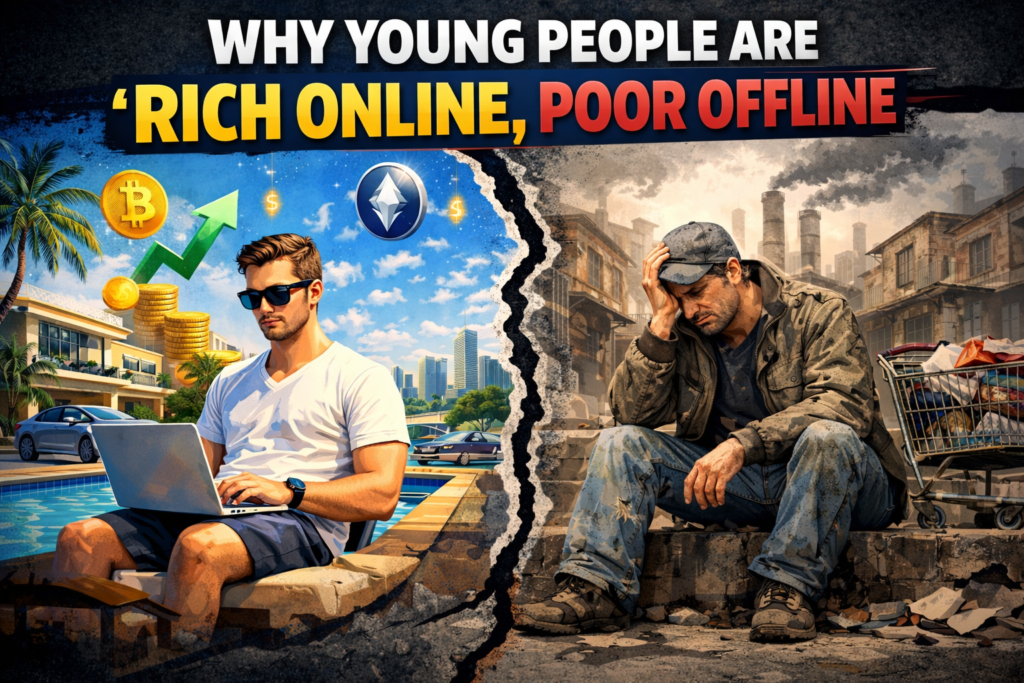
This phenomenon isn’t simply about vanity or dishonesty. It’s a complex, systemic issue driven by digital economics, psychological pressures, and a new form of “lifestyle inflation”—one where the currency isn’t just money, but attention, validation, and social capital. This 3,000-word exploration dissects the roots, mechanics, and consequences of this modern divide, explaining why so many young people today navigate a pronounced gap between their digital and physical realities.
Part 1: Defining the Digital-Offline Wealth Gap
Traditionally, “lifestyle inflation” described the increase in spending as one’s income rises—buying a fancier car, moving to a bigger house. Digital lifestyle inflation is different. It is the pressure to appear to have a luxurious, exciting, or aesthetically refined life online, often irrespective of—and sometimes detrimentally to—one’s actual financial health offline.
The “wealth” displayed is multifaceted:
- Experiential Wealth: Showcasing travel, dining, concerts, festivals.
- Material Wealth: Flaunting fashion, gadgets, cosmetics, home decor.
- Temporal Wealth: Projecting an image of leisure, flexibility, and freedom (the “I’m always on vacation” aura).
- Social Wealth: Displaying a vibrant social circle and romantic life.
This curated affluence exists in stark contrast to offline economic pressures many face: stagnant wages, soaring costs of housing and education, precarious employment, and burdensome debt. The online persona becomes a compensatory avatar, a form of performative prosperity in a landscape of actual financial constraint.
Part 2: The Engine Room: Forces Fueling the Performance
Several powerful, interconnected forces create and sustain this pressure to perform wealth.
1. The Algorithmic Marketplace of Attention
Social media platforms are not neutral spaces; they are attention economies. Content that generates engagement—likes, shares, comments—is rewarded with greater visibility. What typically engages? Aspirational, aesthetically pleasing, or envy-inducing content. A perfectly plated brunch outperforms a photo of a stack of bills. A trendy outfit haul gets more traction than a thoughtful post about budgeting. Thus, users are algorithmically incentivized to create content that signals success and desirability, pushing them to invest in the props and experiences that generate this digital currency.
2. The Rise of Influencer Culture and Aspirational Marketing
Influencers have professionalized the art of curated living. Their livelihoods depend on portraying aspirational lifestyles to sell products, experiences, and a personal brand. For the average user, the line between following an influencer and comparing oneself to a peer blurs. When everyone is a personal brand, the pressure to compete in the same visual arena intensifies. Marketing directly targets this, selling not just products but identity and belonging—”buy this to be this.”
3. Social Proof and The Fear of Missing Out (FOMO)
In a digitized world, social proof—the psychological phenomenon where people mimic the actions of others—has moved online. If everyone in your digital cohort appears to be traveling, upgrading gadgets, or attending exclusive events, the implied norm is affluence and consumption. FOMO transforms from a vague anxiety into a constant, visual barrage. The fear isn’t just missing an event; it’s missing out on the social capital and perceived status that comes with documenting it.
4. The Democratization of Luxury (and Debt)
Financial technology has created a disconnect between the act of purchasing and the act of paying. Buy Now, Pay Later (BNPL) services, credit cards, and easy credit allow for immediate possession of status-signaling goods, while deferring the financial pain. You can wear the designer shoes today and worry about the payments over the next six months. This “democratizes” the aesthetics of wealth while potentially hiding the reality of debt.
5. The Erosion of Private Life
Previous generations had a clearer separation between public and private spheres. Today, life—especially for younger digital natives—is lived to a significant degree in the semi-public forum of social media. If you don’t document an experience, did it socially “happen”? This mindset shifts spending from intrinsic enjoyment to extrinsic validation. The return on investment for a purchase becomes the likes it generates, not just the utility or personal joy it provides.

Part 3: The Offline Cost: Consequences of the Digital Facade
The pursuit of a rich online life has tangible, often negative, impacts on offline financial health and well-being.
1. The Debt Trap
The most direct consequence is accumulated consumer debt. Spending on aspirational experiences, fast fashion to never repeat an outfit online, or the latest tech to maintain a cutting-edge feed can outpace income. BNPL plans, while convenient, can lead to multiple overlapping debt cycles that are easy to underestimate.
2. Sabotaged Financial Futures
Money spent on performative consumption is money not saved, invested, or used to pay down student loans. It can delay major life milestones like saving for a home down payment, building an emergency fund, or contributing to retirement accounts. The opportunity cost of digital lifestyle inflation is a less secure financial future.
3. Psychological Toll: Anxiety, Depression, and Inauthenticity
Living a dual life is psychologically exhausting. The constant comparison (“compare and despair”) fuels anxiety, depression, and low self-esteem. The gap between the curated self and the real self can lead to a profound sense of imposter syndrome and inauthenticity. The need to maintain the facade becomes a source of stress, not relief.
4. The Erosion of Real-World Community
When social interaction becomes performative, it can weaken genuine connection. Friendships may feel competitive rather than supportive. The pressure to “keep up” can make individuals reluctant to be vulnerable about real financial struggles, isolating them and perpetuating the illusion that everyone else is doing perfectly fine.
5. Skewed Value Systems
Over time, the metric of success can subtly shift from internal measures (security, contentment, personal growth) to external, visual ones (appearance of wealth, perceived popularity). This distorts personal values and can make it harder to find satisfaction in modest, offline, but genuinely fulfilling aspects of life.
Part 4: Navigating the Divide: Strategies for Real-World Alignment
Breaking free from the cycle of digital lifestyle inflation requires conscious effort to realign online behavior with offline reality.
1. Conduct a Digital Audit
- Motivation Check: Before posting, ask: “Am I sharing this for connection, or for validation? Am I trying to prove something?”
- Curate Your Inputs: Unfollow accounts that trigger compulsive comparison or make you feel inadequate. Actively follow accounts that discuss personal finance, minimalism, mindfulness, and authentic living.
- Calculate the “Cost Per Like”: Honestly track the money spent on items or experiences primarily for content creation. The ratio can be illuminating.
2. Practice Financial Obfuscation
This means deliberately decoupling your spending from your online presence.
- Embrace the “Offline Enjoyment”: Do things solely for your own pleasure. Have a great meal without photographing it. Wear a fantastic outfit without posting it. Reclaim experiences as private joy.
- Normalize Modesty Online: Share affordable joys—a library book, a home-cooked meal, a walk in the park. It challenges the narrative and can be a relief to others.
- Implement a 24-Hour Rule: For non-essential purchases, especially those tied to an online trend, impose a 24-hour waiting period to short-circuit impulse buying.
3. Recalibrate Your Measures of Wealth
- Define “Rich” Offline: What does it mean for you? Is it financial security (no debt, a robust emergency fund)? Freedom to work less? Ability to pursue a hobby? Write this definition down.
- Track Net Worth, Not Social Worth: Focus on growing your actual assets and reducing liabilities. Use budgeting apps to track real cash flow, not social metrics.
- Invest in Invisible Assets: Redirect funds into things that don’t photograph well but build real wealth: retirement accounts, skill-building courses, therapy, or health and wellness.
4. Build a Supportive Offline Community
- Initiate Money Talks: Be vulnerably honest about finances with trusted friends. You’ll likely find allies, not critics.
- Create Non-Consumptive Rituals: Build friendships around activities that don’t require spending: potlucks, game nights, hikes, or skill-sharing.
- Find a Financial Accountability Partner: Someone to discuss goals and setbacks with, keeping your focus on real-world financial health.
5. Embrace Digital Minimalism
Periodically disconnecting via a digital detox resets your brain’s reward system. Reduce screen time, turn off notifications, and use apps in a deliberate, scheduled way rather than impulsively. This creates space to reconnect with your unmediated self and your immediate physical environment.
Conclusion: Towards Integrated Authenticity
The state of being “rich online, poor offline” is a symptom of a cultural moment where our social and economic lives have been profoundly reshaped by technology. It is a rational, if damaging, response to an environment that rewards performance and punishes perceived mediocrity.
The goal is not to shame the performance, but to understand its cost. The path forward lies in conscious integration—deliberately shaping an online presence that, if not a perfect mirror, at least does not actively sabotage one’s offline well-being. It involves reclaiming private life, redefining personal success on sustainable terms, and using the digital world as a tool for genuine connection rather than a stage for exhausting performance.
True wealth is not the appearance of abundance, but the reality of security, autonomy, and the freedom to live—both on and off screen—without a debilitating fear of how you will be perceived. For a generation facing unprecedented economic headwinds, the most radical and prosperous act may be to invest relentlessly in the quiet, offline wealth that no algorithm can measure, but that sustains a genuinely rich life.